
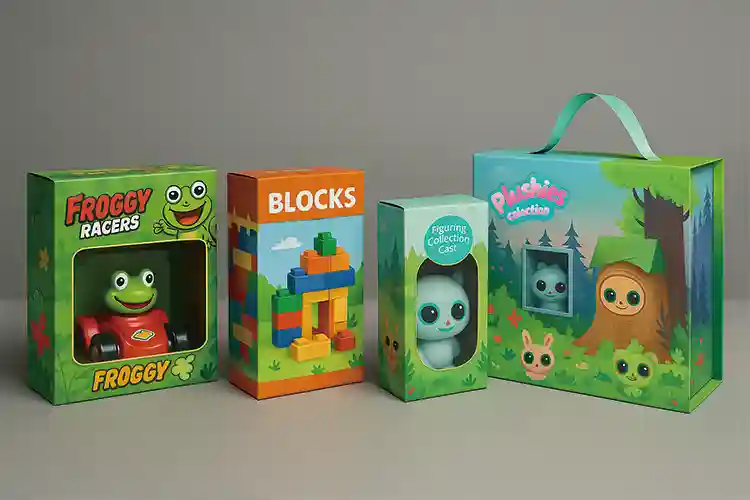
Custom toy boxes are used to support brands that would like to have a structured packaging solution for toys in retail and gifting markets. Most manufacturers depend on custom toy boxes to offer presentation value, as well as to provide product protection through various channels of distribution. Custom toy boxes Canada is representative of the regional packaging coherence and market-ready packaging design in the toy industry. We see demand increases in custom toy boxes due to branding requirements, retail display requirements, and packaging durability requirements across a variety of toy types and seasonal product lines, where packaging becomes a part of their customer perception and product identification in competitive marketplaces worldwide,e where manufacturers and packaging groups work with toy producers worldwide, de supporting consistent product branding results and retail display requirements.
Lid Design
Toys have packaging designs based on controlled closure structures that ensure the safety of the products during storage and transportation. Custom toy boxes wholesale are customized with secure covering alternatives that aid protection and stacking organization within the retail environments. The manufacturers are partial to the stiff materials and sharp folding methods that make the materials durable through a number of handling cycles in the supply chain. The design factors involve line fit, hinge, surface finishing, and compatibility with custom printed toy boxes branding items to be used in presenting the toys. Packaging engineers consider aspects of structural balance and usability, as well as maintaining the integrity of the product in the diverse retail and shipping environments. Design consistency assists in sustaining brand identity and enhancing customer experience of various toy products in various categories in the world market.
Personal Touch
Toy retail packaging focuses on personalisation with details of design that are specific to the product personality and audience expectations. Toy Box solutions enable personalized brand solutions to give consumers a unique visual identity and unboxing experiences. The choice of materials affects durability, feel, and structural performance in distribution and display conditions. Design teams combine graphics, typography,e and variation of shapes to suit toy themes and consumer interest objectives. Uniformity of packaging design aids brand recognition in a variety of product lines and point-of-sale locations. The manufacturing process is aimed at accuracy of cutting, surface matching, and quality of finishing so that it is presented professionally to fit the toy distribution channels working in competitive business settings to produce high standards that satisfy retailers and buyers within a network of businesses in a competitive environment.
Print Quality
Packaging visual communication is the core of attention seeking and product value in retail space, in the use of graphics, color scheme, and extensive artwork on the surface of custom printed toy boxes to enhance brand storytelling. Methods of printing define the clarity, durability, and wear resistance in the handling and transportation stages. The layout, composition, and visual hierarchy are coordinated by packaging designers to enhance consumer interest and product awareness. The perceived value and the purchase behaviour in competitive toy markets depend on surface finishes and the quality of ink. High-end printing systems help in ensuring uniformity in batches, as well as precision in color, fineness of detailing, and alignment in the case of large-scale manufacturing of toy packaging that is used by manufacturers all over the world in every instance.
Window View
Retail visibility is very important in product selection because consumers would like to see the products they want in a transparent way before they make decisions to buy them. Toy boxes with window enable them to see what they want in a transparent way, which boosts buyer confidence and also increases the shelf appeal of products in stores. The integration of transparent panels involves stability of the material and accurate fitting to ensure the structural integrity when handling. A good balance between visibility and protection takes care of the products being safe and, at the same time, visible. Manufacturers look into the thickness of clear material, sealing technique, and long-term usage durability. The performance of packaging relies on the reinforcement of structure around display areas and having the same quality standard across production batches within retail distribution channels, implemented in different commercial settings worldwide.
Logo Impact
Constant visual identity components underpin brand recognition in packaging as they support consumer memory. Custom toy boxes with logo enhance brand presence by effectively placing marks and integrating design. The position of the logos influences visibility and adds to perceived product value in retail settings. Design teams make sure that the logo size, color harmony, and packaging arrangement are aligned to make a successful brand. The choice of material and the accuracy of printing determine the quality and longevity of the final presentation in the distribution systems. The manufacturing processes combine design accuracy, color matching, and surface finishing processes to ensure uniformity throughout mass production, coupled with compatibility with retail packaging demands of toy products in the competitive market, with long-term brand reliability standards realized internationally.
Pack Systems
Toys’ packaging systems involve design, material choice, and manufacturing efficiency. Custom toy packaging solutions involve structural stability, functionality, and uniform product line presentation. The manufacturing processes focus on accuracy, cost, and the scale of various categories of toys. The packaging design team measures the ergonomics and aesthetics with better product interaction. Surface treatments and structural reinforcement can guarantee durability in the handling, storage, and transportation stages. Production processes combine progressive machinery, quality testing, and material testing processes to ensure uniformity and dependability in the large-scale early manufacturing processes, as well as packaging to satisfy the retail distribution and consumer satisfaction standards in the international toy markets, and ensure consistency in the operational efficiency and quality assurance measures used throughout the production.
Bulk Supply
Massive repacking of goods encourages the constant supply chains and cost efficiency for manufacturers and retailers.Custom boxes wholesale deals enable the businesses to maintain a steady stock and save money per unit production. Bulk procurement practices enhance the planning of operations and availability in various retail outlets. To ensure that they supply efficiently to meet demand variations, manufacturers organize supply logistics and material sourcing. Standardized package formats will help speed up the production process and enhance storage in warehouses. Quality control systems can deliver consistency through large volumes of production while preserving structural integrity, visual consistency, and functional reliability in toy packaging delivered via retail networks and wholesale supply channels operating at scale that can meet industry performance standards that have consistently met standards around the world.
Conclusion
Custom toy boxes are a designed form of packaging design which aids in product presentation, product protection, and branding in the industries in large-scale operations by facilitating efficient production, uniform quality, and effective distribution of products. In competitive markets, manufacturers depend on accurate material choice, printing accuracy, and structural engineering to ensure durability and visual appeal. The design consistency, functional performance, and correspondence with retail expectations are key packaging strategies that contribute to consumer perception, and long-term usability in different distribution channels and product categories used in the contemporary toy manufacturing environment that promotes industry standards and practices and ensures reliability across global packaging requirements globally accepted.
