
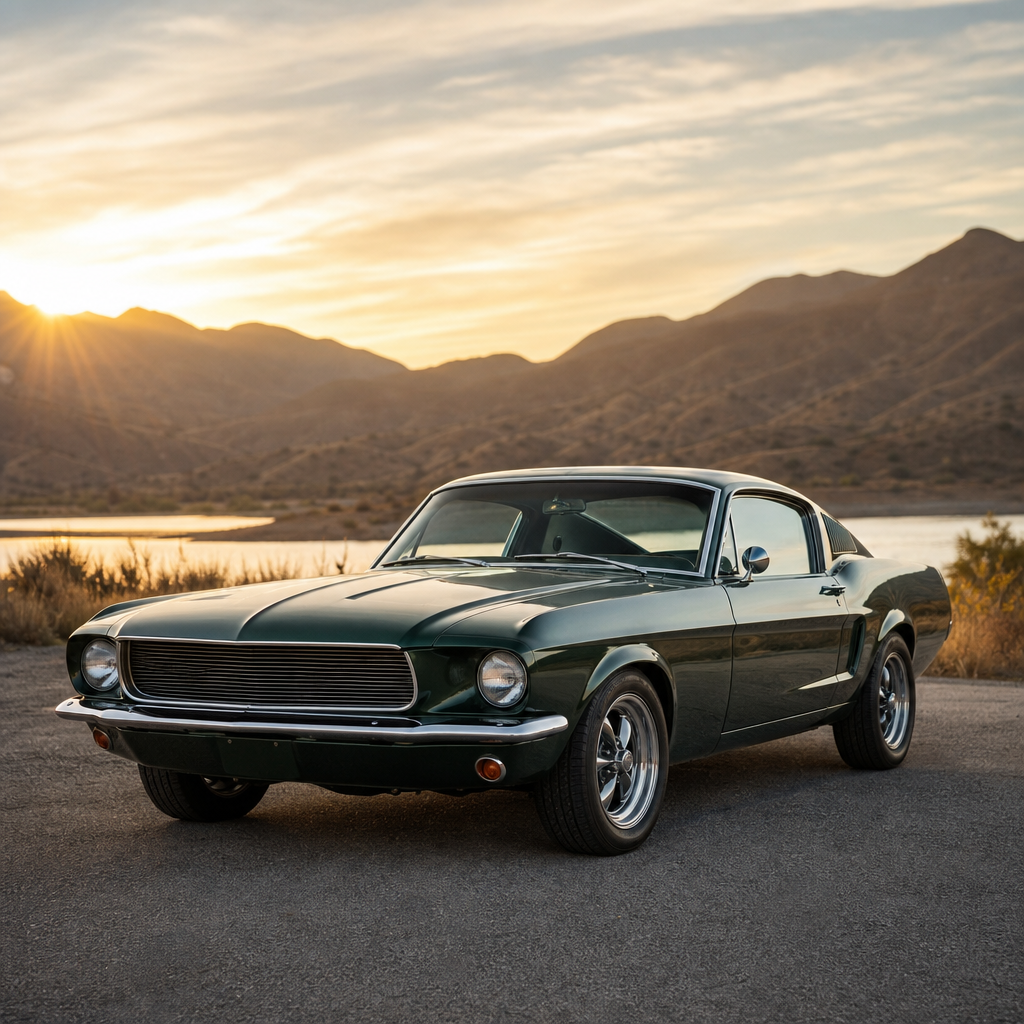
Few automobiles in American history have managed to hold the cultural and mechanical reverence that the 1967 Ford Mustang GT commands today. Decades after it rolled off the assembly line in Dearborn, Michigan, this car continues to captivate collectors, restorers, and driving enthusiasts alike. It is not simply nostalgia that keeps the 1967 Mustang GT relevant — it is the genuine engineering ambition, the bold design language, and the raw driving character that make it a timeless benchmark in automotive history. Understanding why this car endures requires looking closely at what made it exceptional when it was new, and what continues to make it irreplaceable today.
A Design That Defined an Era
The 1967 model year represented a significant evolution for the Mustang platform. Ford’s designers widened the body, giving the car a more muscular, planted stance compared to its earlier iterations. The fastback roofline, in particular, became one of the most recognizable silhouettes in automotive design — a sweeping arc from the roofline to the rear deck that communicated speed even when the car was standing still. The front end received a more aggressive treatment with a wider grille opening, and the overall proportions shifted toward something more substantial and purposeful. This was no longer just a sporty compact; it was a genuine performance machine dressed in elegant sheet metal.
The GT package elevated the standard Mustang further, adding specific badging, a handling suspension, front disc brakes, and a distinctive exhaust system that announced the car’s presence long before it came into view. These were not cosmetic additions — they were functional upgrades that transformed the driving experience in meaningful ways. The GT trim represented Ford’s commitment to delivering a car that could perform as impressively as it looked.
Engineering Ambition Under the Hood
The engine options available in the 1967 Mustang GT were nothing short of remarkable for their time. Buyers could opt for the 390 cubic inch FE V8, which produced 320 horsepower and delivered the kind of torque that made highway merges feel effortless and track days genuinely exciting. For those seeking the absolute pinnacle of factory performance, the legendary 427 and later the 428 Cobra Jet were available, pushing output figures that rivaled purpose-built race cars of the era.
What made these engines compelling was not just their raw output but the character they brought to the driving experience. The deep, resonant exhaust note, the mechanical feedback through the steering wheel, and the progressive power delivery created a sensory experience that modern performance cars, despite their superior objective performance, often struggle to replicate. There was an honesty to the engineering — a directness between driver input and vehicle response — that enthusiasts continue to seek out and celebrate.
The Transmission and Chassis Experience
Paired with a four-speed manual transmission, the 1967 Mustang GT offered a driving engagement that demanded skill and rewarded it in equal measure. The close-ratio gearbox allowed drivers to keep the engine in its power band through corners, while the updated suspension geometry provided a level of handling precision that surprised many who assumed American muscle cars were only capable of straight-line speed. Ford had clearly invested in making the GT a complete performance package rather than simply a drag strip special.
Cultural Impact and Collector Appeal
The 1967 Mustang GT’s cultural footprint extends well beyond the automotive world. Its appearance in film, television, and popular media throughout the late 1960s and beyond cemented its status as an icon of American freedom and ambition. The car became synonymous with a particular vision of the open road — one defined by personal expression, mechanical confidence, and a refusal to compromise on character. To understand the full scope of the Mustang’s legacy across its many generations, exploring a comprehensive overview of Ford Mustang generations reveals just how significant the 1967 model year was in shaping the direction of the entire lineage.
Today, well-preserved and properly restored examples command serious attention at auction houses and private sales. The combination of authentic GT badging, matching-numbers engines, and documented history can push values into six-figure territory for the finest examples. Even project cars and driver-quality examples attract competitive bidding, reflecting the depth of enthusiasm that surrounds this particular model year.
Restoration and the Modern Classic Market
The restoration market for the 1967 Mustang GT is remarkably well-supported. Parts availability, both original new-old-stock and high-quality reproduction components, means that even heavily worn examples can be brought back to concours condition with sufficient investment and expertise. Specialist restorers have developed deep knowledge of the specific details that distinguish authentic GT models from lesser trim levels, and this expertise has helped maintain the integrity of the collector market. For buyers entering this space, working with knowledgeable specialists is essential to ensuring that a purchase represents genuine value rather than a costly misrepresentation.
Revology Cars and the Art of the Reimagined Classic
For those who want the authentic experience of a 1967 Mustang GT without the inherent uncertainties of the vintage market, specialist manufacturers have developed compelling alternatives. Classic car fans love the 1967 Mustang GT precisely because it represents the perfect intersection of period-correct aesthetics and modern mechanical reliability. Companies like Revology Cars have built their reputation on delivering exactly this combination — vehicles that honor the original design and character while incorporating contemporary drivetrain and safety technology that makes daily use genuinely practical.
This approach has found a receptive audience among enthusiasts who appreciate the visual and emotional appeal of the classic Mustang but prefer the confidence that comes with modern engineering standards. The result is a car that can be driven regularly without the anxiety that often accompanies ownership of a genuinely vintage vehicle.
Comparing Classic and Modern Performance Philosophies
The conversation around classic muscle cars like the 1967 Mustang GT inevitably touches on how automotive performance philosophy has evolved. Modern performance vehicles, including sophisticated electric platforms, approach the driving experience through layers of technology and driver assistance systems. Understanding how contemporary vehicles manage performance delivery — for instance, examining how driving modes in vehicles like the Cadillac Lyriq affect range and battery usage — highlights just how different the engineering priorities have become. Where the 1967 Mustang GT communicated directly and mechanically, modern vehicles mediate the experience through sophisticated software and energy management systems. Neither approach is inherently superior; they reflect the values and priorities of their respective eras.
Conclusion: An Enduring Legacy
The 1967 Mustang GT occupies a unique position in automotive history — a car that was genuinely excellent when new and has only grown in stature with the passage of time. Its combination of purposeful design, capable engineering, and cultural resonance has ensured that it remains relevant and desirable across generations of enthusiasts. Whether encountered in a museum, on a show field, at a track day, or on a Sunday morning drive through winding roads, the 1967 Mustang GT continues to deliver an experience that is unmistakably its own. That is the true measure of an automotive icon — not the specifications on paper, but the impression it leaves on everyone who encounters it.
