

Interactive marketing has always sounded better in theory than it worked in practice. A brand wants a quiz, a simple branded game, or an interactive experience for a launch, but building one traditionally meant hiring a developer, briefing them on the brand, waiting weeks for a build, and hoping the result still felt on brand by the time it shipped. That slow, expensive loop is a big part of why most campaigns default to a static landing page instead of something people can actually play.
The Old Cost of “Just Make It Interactive”
Interactive content converts better and gets shared more than static content, and most marketing teams already know this. The problem was never demand, it was production cost. A short playable experience for a single campaign often wasn’t worth the development budget it required, so teams settled for a form, a video, or a static graphic instead, even when everyone involved agreed a playable piece would have performed better.
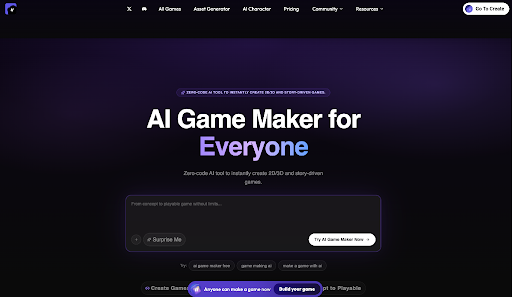
That cost structure is exactly what an AI video game maker changes. A marketing team can describe a concept in plain language, something like “a short quiz that matches customers to a product line through a playful branching path,” and Combos turns that into a structured concept and then a working build, generating the visuals, logic, and flow automatically. No developer briefing cycle, no weeks of back and forth. The gap between a campaign idea in a meeting and a testable build shrinks to something a single campaign’s budget can actually support.
Building on Brand Without a Full Dev Cycle
The approach known as vibe coding, describing a tone or concept and letting AI construct the working version, maps unusually well onto marketing work, where “does this feel like our brand” often matters more than deep technical complexity.
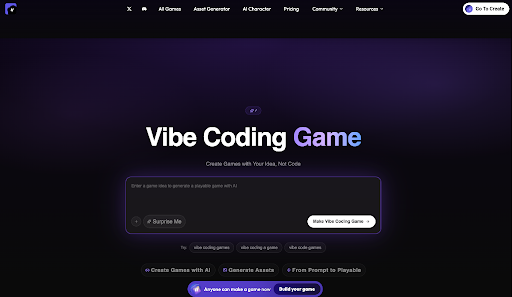
Combos supports this directly through its vibe coding workflow. A vibe coding game starts from a description of the mood, visual style, and interaction type a campaign needs, either from a template or a fully custom prompt, and the AI generates assets, logic, and a prototype from there. A team can then adjust colors, copy, pacing, and visuals in the no-code editor until it actually matches brand guidelines, without needing a developer involved in every small revision.
What This Actually Looks Like in a Campaign
The results tend to be lightweight by design, since most campaign content doesn’t need deep mechanical complexity to work.
Branded quizzes that route customers toward relevant products through genuinely interactive branching rather than a static form. Short seasonal or launch tie-in games built around a single mechanic and a limited time campaign window. Simple loyalty or engagement pieces that reward participation with a discount code or early access. Interactive product explainers that let a customer engage with a feature set instead of reading a bullet list. None of these need to be technically ambitious. They need to be fast to produce, easy to update mid-campaign, and genuinely fun enough that someone shares it unprompted.
Why Speed Matters More in Marketing Than Almost Anywhere Else
Campaigns run on fixed windows. A launch date doesn’t move because a build is running behind, and a seasonal tie-in loses most of its value if it ships after the season it was built for. Publishing with a single click and a shareable link that updates automatically means a marketing team can adjust a live piece mid-campaign based on early performance data, rather than locking in a final version weeks before launch and hoping it lands.
Measuring What Actually Works
Interactive content also produces cleaner data than most static creative, since every choice a participant makes is a signal about what resonated. A marketing team can see exactly where people dropped off, which branch was most popular, or which question in a quiz produced the most engagement, and use that information to refine the next campaign rather than guessing based on impressions and click through rates alone. That kind of granular feedback used to be reserved for teams with dedicated product analytics, and now it comes built into any interactive piece a team decides to run.
Testing Multiple Concepts Before Committing Spend
Because production cost is no longer the limiting factor, marketing teams can afford something that used to be nearly impossible: testing several interactive concepts against a small audience segment before deciding which one gets the full campaign push. A team can build three different quiz formats, run them past a small sample, and put real budget behind whichever one performs best, rather than committing to a single interactive concept based on internal opinion alone. That kind of testing was previously reserved for the largest campaigns with the largest budgets. Now it’s realistic for a much wider range of marketing teams.
A New Line Item, Not a Replacement for the Old Ones
This isn’t a pitch to replace video ads or static creative. It’s an additional option that used to be priced out of reach for most single campaigns and now genuinely isn’t. Marketing teams that once treated “interactive experience” as a stretch goal reserved for a handful of big budget launches can start treating it as a normal option available for almost any campaign that would benefit from it.
The teams getting the most value out of this aren’t necessarily the ones with the biggest budgets. They’re the ones willing to test whether a playable piece actually outperforms a static one for their specific audience, something that used to be too expensive to even try.
