
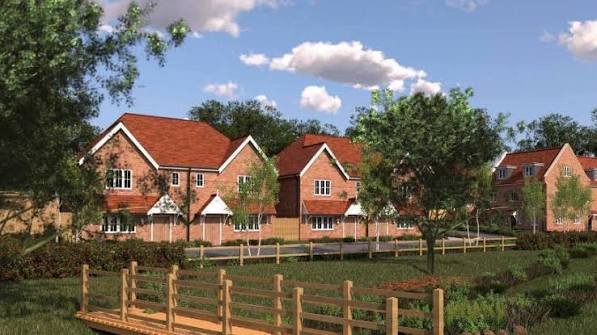
Surrey planning operates under a fundamentally different framework from Greater London. The distinction isn’t cosmetic. It shapes what can be built, how volume gets calculated, how ecology surveys feed into applications, and how borough officers interpret the same national planning policies differently from their London counterparts.
Homeowners approaching Surrey extensions with London assumptions consistently discover the mismatch during pre application discussions, if they’re lucky. The unlucky ones find out at refusal stage after eight to twelve weeks of officer review. Understanding the framework properly before design work begins is the difference between a smooth Surrey project and a costly detour into appeal territory. Experienced Surrey architects navigate this framework as second nature because they operate inside it every week.
The Green Belt Policy That Governs Most Ambitious Surrey Extensions
Large portions of Elmbridge, Mole Valley, Waverley, and Surrey Heath fall inside the Metropolitan Green Belt. The Green Belt is not administered by Surrey County Council. It sits under national policy through the National Planning Policy Framework, chapter 13.
Paragraph 154 of the NPPF sets out the specific tests for construction inside Green Belt. New buildings are inappropriate development unless they fall into specific exceptions. The relevant exceptions for residential clients cover replacement dwellings, limited extensions to existing dwellings, and limited infilling in villages.
Replacement dwellings must not be materially larger than the building being replaced. Extensions must not result in disproportionate additions over and above the size of the original dwelling. Both tests hinge on volume calculations that Elmbridge, Mole Valley, and Waverley councils each interpret slightly differently. Getting the replacement dwelling test right requires working with new build architects who understand how each Surrey borough measures original volume before the 50 percent uplift threshold gets applied.
The 50 percent volume uplift threshold represents the broad interpretation applied across most Surrey authorities. Some councils apply it more strictly. Guildford Borough Council traditionally reads paragraph 154 more restrictively than Elmbridge, which sits at the more permissive end of the Surrey planning spectrum.
How Replacement Dwellings Actually Get Approved in Surrey
Replacement dwelling applications inside Surrey Green Belt succeed on three specific arguments held together in one coherent submission.
First, the volume calculation. Original external volume of the existing dwelling gets measured to the underside of the roof covering, including any pitched roof void where the geometry allows habitable use. Attached outbuildings and garages built under the original planning consent count into the baseline. Later additions built under separate consent do not. Getting the baseline right on the first submission avoids the correction rounds that add months to determination timelines.
Second, the design quality argument. Surrey planners increasingly expect replacement dwellings to demonstrate energy performance above baseline Building Regulations. Passivhaus principles, MVHR ventilation, triple glazing, and airtightness figures below 3 m3/hr/m2 at 50 Pa now sit inside the expected specification on premium Green Belt plots. Weaker specifications get pushed back during officer review.
Third, the landscape and openness argument. Green Belt policy assesses effect on openness of the wider setting rather than the new building alone. Retention of mature planting, restraint on hard landscape spread, and considered driveway design all feed into whether the application clears. Landscape strategy needs sitting alongside the architectural drawings from concept stage, not added afterwards to satisfy officer concerns.
Applications delivering strongly against all three arguments clear at approval rates well above the Surrey Green Belt average.
The Ecology Survey Requirements That Add Real Timeline Cost
Bat surveys are the most common ecology requirement on Surrey Green Belt applications. Older detached properties with tile roofs, timber soffits, and open loft voids frequently host bat roosts. Natural England licences apply where bats or their roosts might be disturbed.
Bat survey timing follows the ecological calendar. Preliminary Roost Assessment surveys can happen year round. Emergence surveys require specific seasonal windows between May and September. Missing the seasonal window pushes the ecology work into the following year and delays the planning submission accordingly.
Preliminary Ecological Appraisals covering great crested newts, reptiles, and nesting birds get requested on plots backing onto wooded boundaries or water features. The presence of a Site of Special Scientific Interest within 5 kilometres often triggers additional ecology scoping. Ancient woodland proximity carries similar implications.
Arboricultural impact assessments are required where Tree Preservation Orders apply or where trees over 75mm diameter sit within influencing distance of proposed foundations. The Root Protection Area calculation follows BS 5837:2012 methodology.
The Local Plan Variation Between Elmbridge, Guildford, and Waverley
Each Surrey borough council operates its own local plan, adopted at different times and updated on different cycles. The frameworks diverge significantly on design guidance, materials preferences, and rear elevation tolerances.
Elmbridge Development Management Plan emphasises retention of the leafy character across Cobham, Esher, and Weybridge. Rear extensions and replacement dwellings are generally supported where the design respects the established building line and materials sit within the local vernacular. Handmade brick, natural slate, and timber cladding all sit inside typical Elmbridge approvals.
Guildford Borough Council operates under the Guildford Local Plan Strategy and Sites 2019. Design policy weights heavily toward respecting the historic character of individual villages. Applications inside conservation areas covering Shere, Chilworth, Compton, and the medieval core of Guildford face particularly strict material scrutiny.
Waverley Borough Council covers Farnham, Godalming, Haslemere, and Cranleigh. The Waverley Local Plan Part 1 sets the strategic framework, with Part 2 covering site allocations. Conservation area coverage across historic Farnham and Godalming triggers similar design constraints to inner London conservation areas, though the material vocabulary differs. Handmade brick and clay tile predominate rather than the London stock brick common in Camden or Islington.
The Enforcement Reality Nobody Discusses at Sales Stage
Surrey councils enforce planning breaches more actively than the average London borough. Unauthorised extensions on Green Belt properties trigger enforcement notices consistently. Retrospective planning applications rarely succeed where the original design would not have been approved through the standard route.
The four year immunity rule for unauthorised residential extensions and the ten year immunity rule for changes of use both apply in Surrey as elsewhere in England. However, Surrey enforcement teams actively investigate reported breaches. Neighbour complaints on Green Belt encroachments carry weight and lead to formal action more often than in dense urban areas where enforcement resources stretch thinner.
The practical implication is that Surrey extensions and replacement dwellings must be built to the drawings approved at planning, not to a slightly extended interpretation of them. Deviation between the approved drawings and the constructed work produces enforcement risk that only surfaces years after the build completes. Getting the drawings correct at approval stage protects the property title long into the future.
