
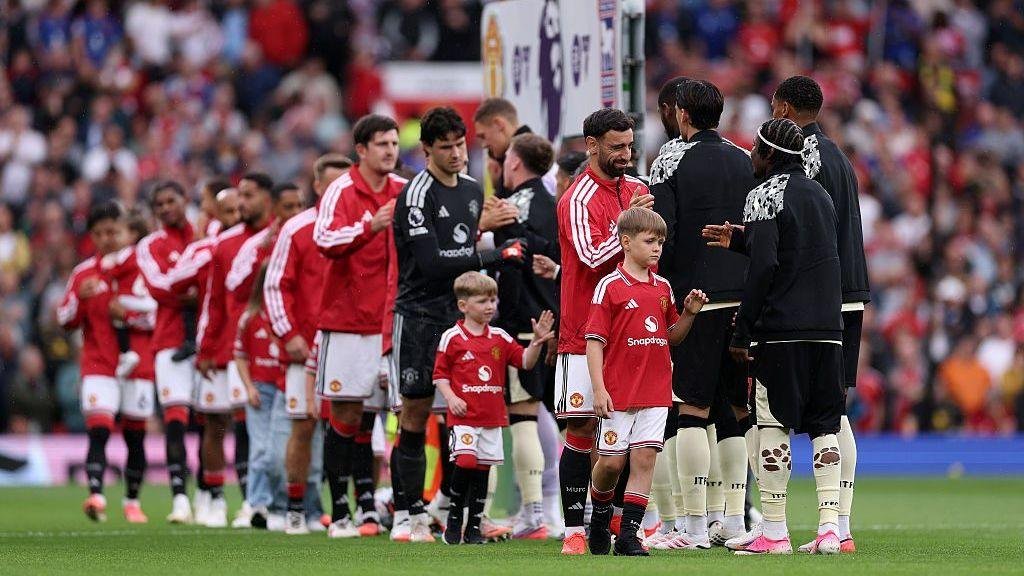
Transfer rumours get the clicks. The thing that actually decides how a United season goes is the calendar, and most fans only notice it in February when the squad looks cooked and nobody can explain why.
Reading it in advance takes about five minutes with a fixture list, because congestion is the most predictable variable in football. The Manchester United fixtures and results page lists upcoming matches with kickoff times in your own zone alongside the current league position, which is enough to see a pile up coming instead of discovering it afterwards.
The base numbers
Old Trafford capacity 74,310, the largest club ground in England and around 13,000 more than Anfield. League titles Twenty. The most recent was 2012/13, Alex Ferguson’s final season, which is now a longer gap than the one that preceded the 1992/93 title. European Cups Three: 1968 against Benfica at Wembley, 1999 against Bayern in Barcelona, 2008 against Chelsea in Moscow on penalties. Ownership Sir Jim Ratcliffe and INEOS took control of football operations in early 2024 with a minority stake of just under 28 percent. Rúben Amorim was appointed in November 2024.
Why the calendar matters more than it used to
| To 2023/24 | From 2024/25 | |
|---|---|---|
| Teams | 32 | 36 |
| Matches before knockout | 6 | 8 |
| Direct knockout entry | Top two of each group | Top eight overall |
| Extra round | None | Playoff for teams finishing 9th to 24th, two more matches |
The same structure applies in the Europa League. A side that finishes outside the top eight plays four more European matches than it would have under the old format.
Stack that on 38 league matches plus two domestic cups, add the stricter added time introduced in 2023/24 that pushed average match length past 100 minutes, and a first team player at a club competing on four fronts is playing meaningfully more minutes than the same player did a decade ago.
Where it shows up
- Thursday night Europa League football, which compresses recovery before a Sunday league match and is the single most disruptive slot in the English calendar.
- Deep rotation in the domestic cups, now standard rather than controversial.
- Injury clustering in December and January, when fixture density peaks and there is no winter break long enough to matter.
What to actually watch
Minutes distribution across the squad, not just the starting eleven. A manager who plays the same eight outfield players 3,000 minutes each is borrowing from spring.
The gap between fixtures rather than the count of them. Two matches with four days between is a different load from two matches with 48 hours between, and a published fixture list is rarely read that way.
Confirmed lineups an hour before kickoff. In a rotation heavy period the predicted eleven from two days out is worthless. The team sheet is the only reliable signal about who is fit. The NameScore iOS app pushes those, plus goal alerts and a TV guide by day and channel for the nights the broadcaster changes without warning.
FAQ
How many matches can one season actually reach?
Under the current formats a side going deep in Europe and both domestic cups can pass 60 competitive fixtures, before international duty. The old group stage version topped out several matches lower.
Does the added time change really matter over a season?
Roughly five extra minutes per match across 50 fixtures is more than four full matches of additional playing time for anyone close to an ever present, with none of the recovery that four extra matches would come with.
Every January there is a debate about whether the squad needs another forward, and almost none of it references how many minutes the existing forwards have already played or how many matches sit in the next 30 days. That is a solvable problem, and it explains more about March form than any amount of scouting footage.
